Efficient
Ledger allows businesses that hire or assign stock to customers or staff to streamline checking out and returning processes, saving time and money.
RFID Asset Operations
Ledger helps teams manage physical assets across allocation, returns, maintenance, reporting, and lifecycle visibility. It is built for organisations that need RFID to support real operational work, not just item identification.
A Calo x Zentag initiative
March 2026 Update
Built for Real Operations
The real value in RFID comes from how well it supports operational workflows. Teams managing garments, tools, equipment, kits, and shared inventory need to know who has an asset, when it came back, how often it has been used, and what needs to happen next.
Ledger brings those signals together so operational teams can reduce manual work, move faster during high-volume handling, and make better-informed decisions about asset care and lifecycle management.
Core Ledger Features
The latest product updates build on Ledger's original value: making asset handling more efficient, more accurate, and easier to integrate into the systems teams already rely on.
Ledger allows businesses that hire or assign stock to customers or staff to streamline checking out and returning processes, saving time and money.
The RFID-based asset management system reduces human error and creates easy asset management of stock and clear records of who has what.
Ledger can be integrated into an existing HR platform or sales system. Integrating the systems gives users instant access to accurate, up-to-date information.
March 2026 Product Update
These updates extend Ledger's existing workflow and integration strengths with stronger reliability, better lifecycle visibility, and faster scan-heavy performance.
Reliability
Improved scanner detection and reconnection logic helps reduce setup friction, minimise downtime from device interruptions, and give operators clearer visibility into scanner status.
Workflow Speed
Stronger asset matching, better caching, and more consistent RFID handling improve performance in return-heavy workflows where teams need immediate feedback during high-volume scanning.
Lifecycle Management
Ledger is evolving to help teams trigger cleaning, servicing, inspection, or maintenance actions based on actual asset activity rather than guesswork or manual spreadsheets.
Visibility
Reporting is becoming more operationally useful, helping teams identify what requires attention across asset use, maintenance, and workflow activity instead of only summarising what already happened.
Context
Improved search and record visibility make it easier to understand how an asset has moved through allocation, return, and maintenance-related events over time.
Operational Impact
Ledger is moving beyond simple tracking into a more practical operational system. When RFID supports workflow performance, maintenance visibility, and asset history, teams spend less time reconciling records and more time acting on what matters.
That means faster day-to-day handling, fewer interruptions when scanners reconnect, stronger visibility into asset condition, and clearer reporting on what needs attention across the lifecycle.
Supported Hardware
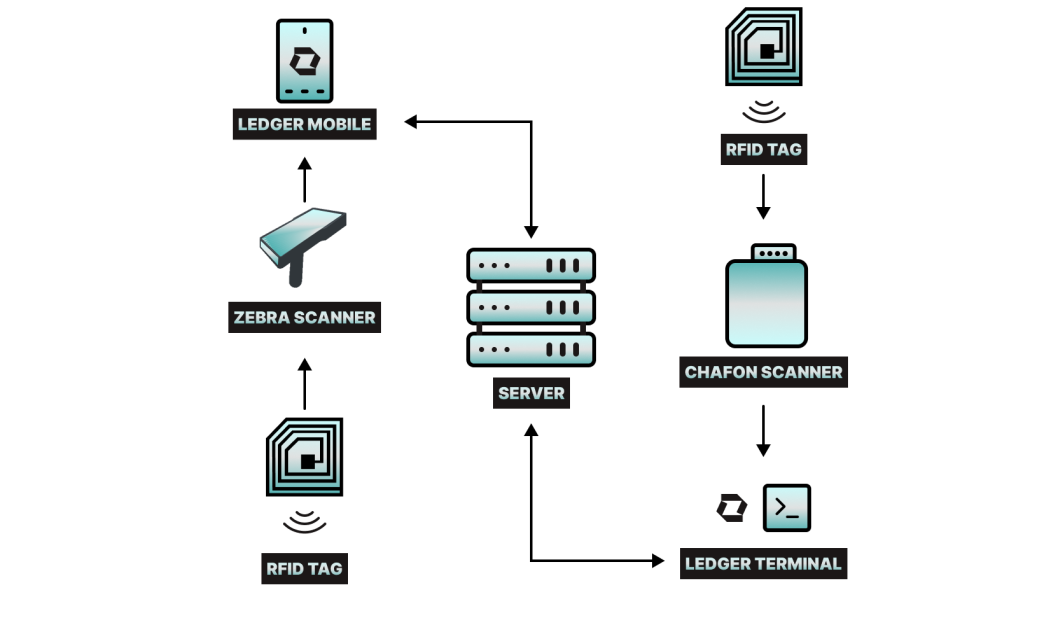
We have started by organising supported hardware into practical categories, so teams can quickly see what fits a desk-based process versus a mobile scan-heavy workflow.

Supported Hardware
Mobile, scan-heavy hardware for fast returns, allocations, cycle counts, and exception handling in busy environments.


Supported Hardware
Compact desktop readers for check-in desks, service counters, issue points, and controlled read/write workflows.
Looking Ahead
If your team manages garments, tools, equipment, or other shared assets, we can help you explore whether Ledger is the right fit for reducing manual administration and improving lifecycle visibility.
Start a Ledger conversation