Missing Stock
Teams struggle to confirm what is out, what is missing, and what should be chased before the next issue cycle begins.
Uniform And Garment Operations
Ledger helps uniform programs, regalia operators, linen teams, and rental garment businesses reduce manual issue and return admin while keeping maintenance and status history in one operational system.
Built For
Operational Pain
Busy collection and return periods create a narrow window to issue, recover, inspect, and reallocate stock. When records are split across spreadsheets, ordering systems, and manual checks, teams lose time and confidence at exactly the wrong moment.
Teams struggle to confirm what is out, what is missing, and what should be chased before the next issue cycle begins.
Manual checks add friction during busy return periods and delay the point where staff can confidently mark items back in.
Repair, cleaning, and status information often lives outside the main asset record, which makes decisions harder later.
Ops staff waste time exporting, matching, and checking records across systems just to understand current stock position.
How Ledger Helps
It is built for operational flow, so staff can handle assets quickly during peak periods while still preserving the history needed for accountability, follow-up, and reporting.
Issue
Connect garments to an order, person, or collection event with a cleaner operational record from the start.
Return
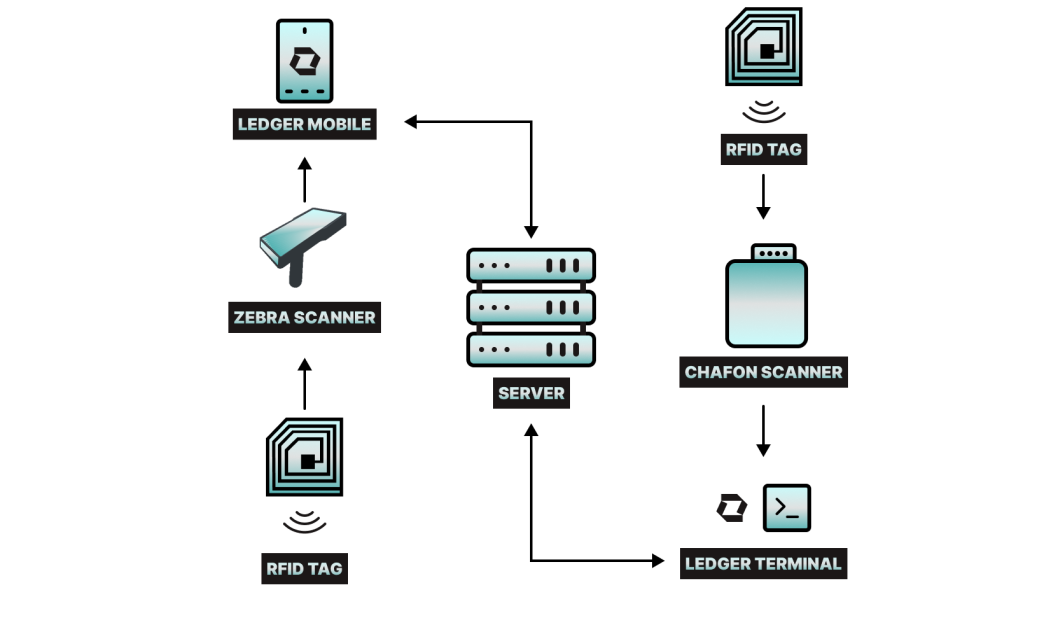
Use RFID scans to confirm what came back quickly and surface outstanding items before manual follow-up begins.
Maintenance
Keep service and readiness status attached to the garment record so the next issue decision is based on current condition.
Reporting
Give managers a clearer history of allocation, return, missing items, and handling activity across the lifecycle.
Outcomes
Faster turnaround during collection and return periods.
Fewer lost or unreturned garments left buried in manual follow-up.
Cleaner accountability for who had what and what still needs action.
One place to track issue, return, repair, and status history.
Client Example
The operational bottleneck was not simple tracking. It was the gap between live orders, fast issue, bulk returns, and confidence that outstanding garments could be identified without heavy manual reconciliation.
Client Type
GWC Regalia Hire manages high-volume graduation regalia issue and return workflows with tight turnaround windows.
Initial Problem
Order data and RFID tracking were split across systems, which forced manual exports and made late-order changes hard to manage.
What Changed
The new system connected live order information with RFID issue and return handling so operators could process garments faster.
Operational Result
The team gained a more streamlined hire and return process with clearer records of who had what and what was still outstanding.
Discuss Your Workflow
Tell us how garments are issued, returned, and maintained today. We’ll use that to map where Ledger could remove manual admin or improve accountability.