Unclear Assignment
Teams lose time checking who last had a tool, which kit is complete, or what is actually available for the next job.
Tools And Equipment Tracking
Ledger helps construction, field service, workshop, and shared-kit teams replace manual tool issue and return tracking with scan-based workflows, clearer responsibility, and maintenance history in one system.
Built For
Operational Pain
Shared assets move between people, teams, vehicles, and job sites. Without a reliable workflow, operations managers lose time chasing missing tools, checking responsibility, and trying to understand whether something is in service, overdue, or unavailable.
Teams lose time checking who last had a tool, which kit is complete, or what is actually available for the next job.
Manual logs make overdue returns harder to spot and create more follow-up work for supervisors or warehouse teams.
Service history is often disconnected from usage and assignment data, which makes inspection and readiness harder to manage.
When shared assets move fast, management needs a clearer history than clipboard notes or partial spreadsheets can provide.
How Ledger Helps
It creates a clearer process for assigning tools, confirming returns, checking service history, and reporting on what needs attention without depending on manual chasing alone.
Assignment
Record which employee, team or job receives each tool or piece of equipment, with its status at the point of issue.
Return
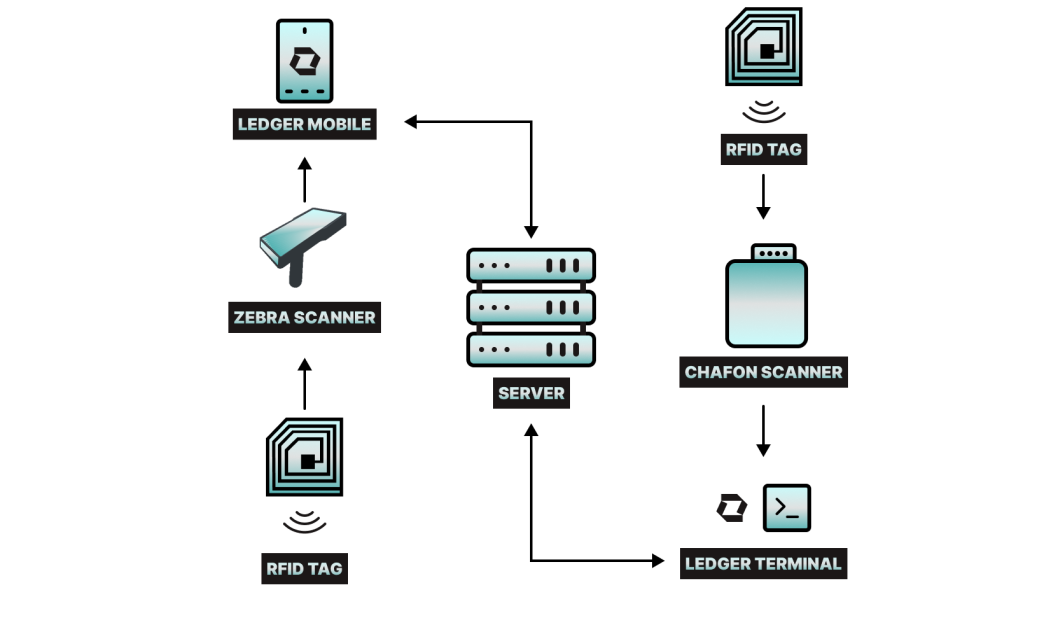
Use scan-based returns to show what is back, what is missing, and what still needs follow-up before the next deployment.
Maintenance
Keep inspection, servicing, and maintenance history alongside the asset record so availability decisions are based on current condition.
Reporting
Give managers a clearer audit trail on assignments, overdue returns, and service-related exceptions across shared assets.
If staff can scan each item at handover, a barcode or QR code may be enough. RFID can read groups of tagged items without scanning each label. Compare tracking methods.
Outcomes
Less manual chasing across depots, workshops, and field teams.
Stronger responsibility tracking for shared tools and kits.
Cleaner maintenance and service history tied to the same asset record.
Better auditability when assets move between people, vehicles, and jobs.
Explore Your Workflow
Walk through assignment, returns, and service records with us. We can discuss your current process, compare reader options, and tailor a demo to the assets your team uses.
Workflow Fit
Explore how your team could assign assets, confirm returns, and check maintenance history in one system.
Hardware Support
Compare handheld readers for scanning on the move with desktop readers for fixed issue stations.
Plan Your Setup
Talk through the readers, existing systems, and asset records your team would need to connect.
Related Client Work
See how Calo has connected RFID scanning with garment orders and returns at GWC Regalia Hire, and discuss which parts of that approach suit your equipment.
Read the GWC Regalia case studyArrange A Demo
Tell us what assets you issue, how they move today, and where service history or return visibility is breaking down. We’ll tailor the demo around that workflow.