Understanding Minimum Viable Product (MVP)

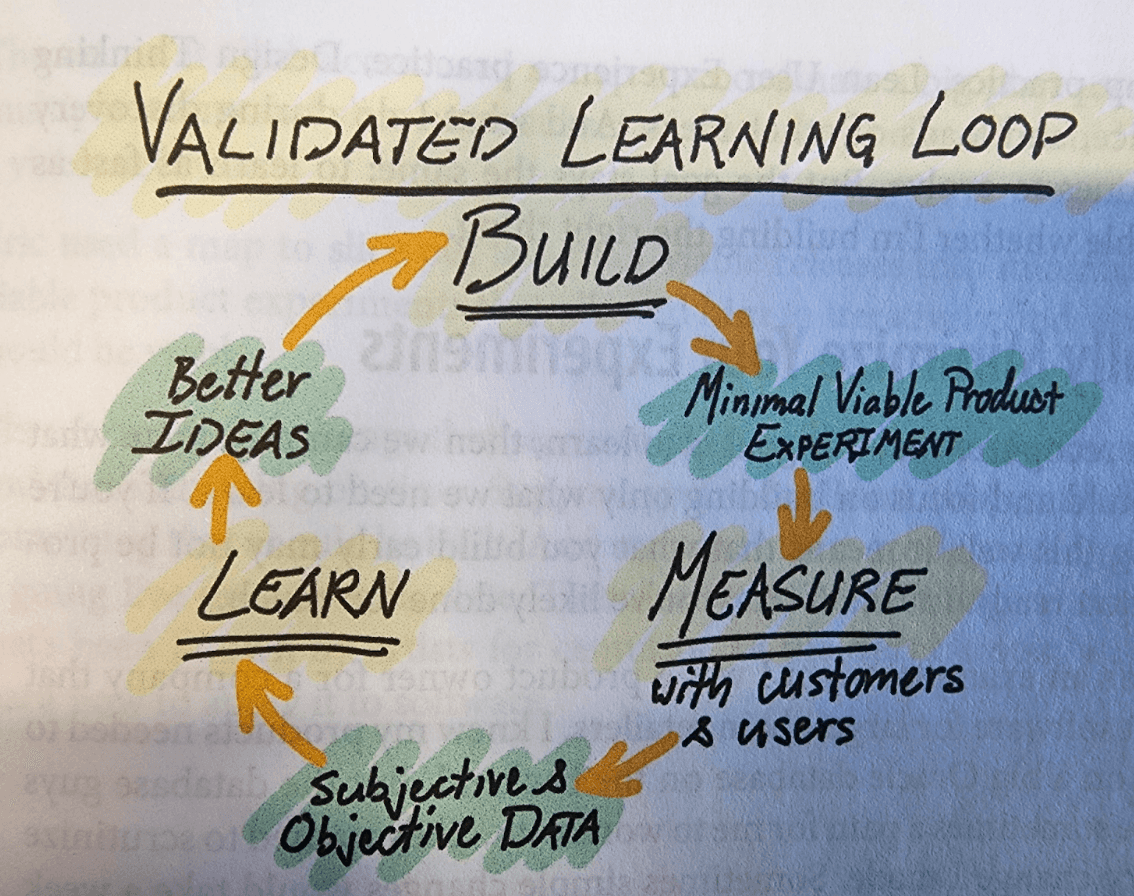
An MVP is an early version of a product or solution, such as a mobile app, which is designed to ensure that the product vision and strategy can meet both user needs and business outcomes. Your MVP has the absolute minimum functionality needed to test your idea.
We build something fast, with the minimum features to validate that people want our product.
BML: MVP is a critical step in the Build, Measure, Learn loop.
What is the minimum?
The minimum differs for every product or solution and depends on the problem that needs to be solved and the desired business outcomes. Based on our extensive experience in software development, user experience and design we work with you to understand what the minimum is. Defining the smallest number of capabilities, features, functionality and packaging needed to get your solution out for validation is the first step in the BML loop.
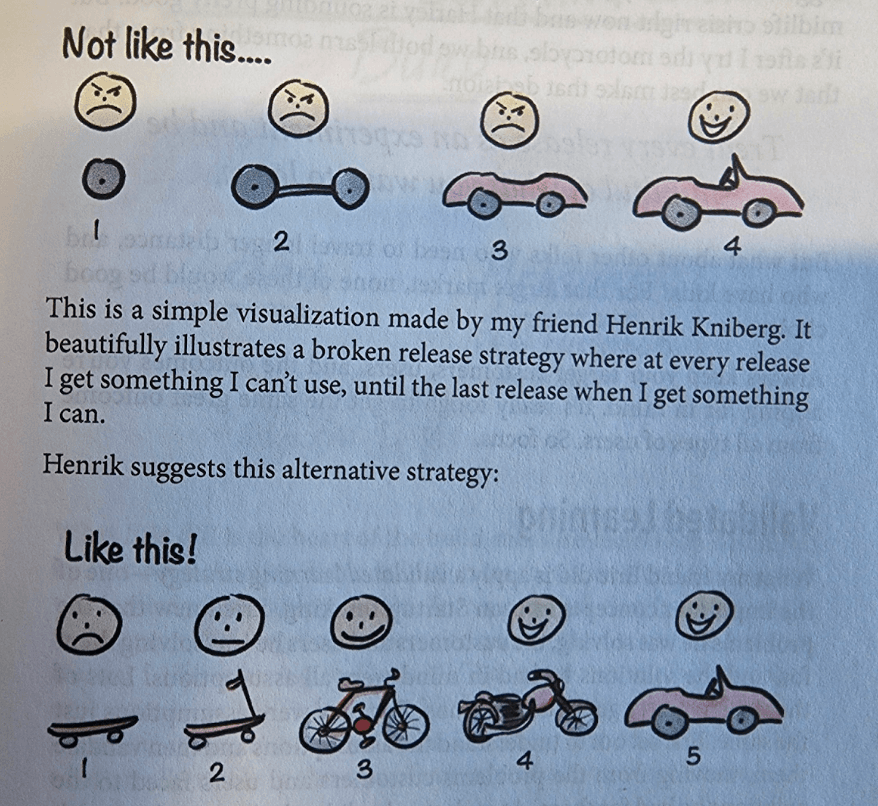
Viable: Product is viable through each stage of development. Top is not
What does it need to be viable?
Whether developing a commercial product or a digital solution for internal use, viability is defined by either delivering enough value that customers are willing to spend money or addressing pain points well enough to get buy-in and uptake from target users.
For it to be viable, people need to be able to use it.
An app product is ready to use
The MVP delivers value and starts gathering data on usability right away - avoiding significant investment in building a product or solution that doesn’t deliver on desired business outcomes or user needs..
Calo’s MVP Approach
- Understand: We dive deep through workshopping your objectives and take you through our process to discover what the MVP needs to deliver. This means developing a shared understanding - we understand your goals and desired outcomes and you understand the digital landscape and what is possible and practical
- Scope of works: We need to make sure we are on the same page, so by understanding the businesses objectives we can define features and deliverables for the MVP
- Design / Mockup: We design and deliver a mockup to illustrate the visual presentation and the functionality of the product. These mockups can be used to visually test the ideas and confirm we have addressed the scope. This process is the first use of the BML loop in developing the solution
- MVP built or extended: Once the design and mockup are approved the MVP/ prototype is built
- Testing, validating: Initial users put the prototype through rigorous real-world testing. Using tools to measure use and performance, and user feedback we gather data to validate the MVPs premise
Persevere
If the testing shows that the MVP aligns with business and user needs the next step is to continue with the same goals and continue the feedback loop of build - measure - learn to continuously improve and refine the product or solution. There will come a point in this loop where there is enough data and functionality to build out the product and take it to a wider audience, however the BML loop continues throughout the lifetime of the product.
Pivot
The data gained from testing can tell a different story to the intended user experience or business outcomes. While this can be used to tweak the app to make it more aligned with the original plans, processing this data with an open mind can lead to a pivot to unexpected uses and opportunities.
For example, while Instagram wasn’t designed as a photosharing app, the innovative use of filters is what caught users' attention, leading to one of the most well-known examples of a pivot, building Instagram.
The pivot could be developing a single feature of the MVP, changing the customer focus, delivering through a different channel or using a successful feature as the basis of a different product.
Images used above are from a book I highly recommend called User Story Mapping by Jeff Patton. His website is here
Related Posts

You can't improve a process you haven't seen
