LoRaWAN asset tracking: a GPS report from 5.1 km away

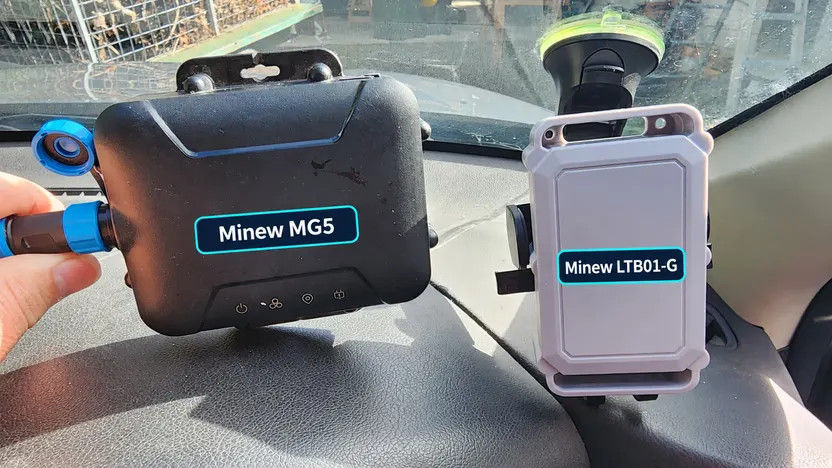
We're bringing LoRaWAN back into OnSight because we have an upcoming CO₂ sensor we need to support. We haven't been able to find a Bluetooth Low Energy (BLE) CO₂ device that works properly for our needs, so that sensor is the main reason for revisiting LoRaWAN.
The last time I worked with LoRaWAN, I was in Auckland and attending the IoT meetup. I remember how long it took to configure everything, digging through forum threads and trying to piece together what needed changing. It was painful.
This time, I was surprised by how quickly I got things running using Codex with computer use. I could spend more time testing the hardware and less time figuring out how to make it talk.
GPS asset tracking has been a useful side benefit of that work. We've been testing with a Minew LTB01-G tracker, connecting gateways from two manufacturers to the same network, and getting their reports into our OnSight integration.
On 13 October 2026, our Minew gateway received a GPS tracker report from approximately 5.1 km away in a straight line. It's an encouraging result, and it gives us something concrete to build on as we test where this setup could fit into everyday equipment tracking.
For an operations manager, the useful question is whether location updates arrive where your equipment travels, often enough to help you make a decision. That's what we're working towards understanding.
How the GPS tracking setup works
In this pilot, the tracker reports its GPS coordinates over LoRaWAN. A gateway receives the radio message and passes it to ChirpStack, the software managing our LoRaWAN network.
Our integration then translates the decoded report into the format OnSight expects and publishes it to OnSight's messaging system.
We're testing with a Minew LTB01-G LoRaWAN GPS Asset Tracker and two gateways:
- A Minew MG6 4G LoRaWAN Stellar Gateway.
- An older RAK7258 WisGate Edge Lite.
Both gateways now feed the same ChirpStack setup. Bringing the older RAK back into service involved a firmware update and connecting it through LoRa Basics Station.
That gives us two working gateways to continue testing, with different hardware feeding the same integration.
What the 5.1 km result tells us
The Minew MG6 received the GPS-bearing report at approximately 5.1 km, calculated between the gateway's configured position and the coordinates reported by the tracker.
For readers interested in the radio measurements, that report arrived at -115 dBm received signal strength and -6.25 dB signal-to-noise ratio.
We still need to establish how consistently reports arrive along the route. There was roughly a ten-minute gap between the last report received through the RAK and reception resuming through the Minew. We haven't isolated the cause of that gap.
The distance is a useful field observation. Assessing coverage for an asset tracking system will take more testing. Our asset tracking guide compares the main approaches.
The next test starts with antenna placement
The RAK gateway was inside a brick building. We confirmed that it received nearby tracker reports, but this outing didn't establish its maximum range.
We'll test an outside or window-adjacent antenna position and repeat the exercise with frequent GPS reports while the tracker moves. That should help us understand how placement affects reception and where gaps remain.
For equipment tracking, we want to understand what happens throughout a journey and how reliably movement produces a fresh update.
Connecting the reports to OnSight
Our integration maps the tracker's GPS coordinates and received signal strength. It also includes a pilot battery-percentage estimate derived from voltage, which needs further testing.
We've confirmed decoded reports from both gateways and completed message publishes towards OnSight. The LoRaWAN GPS tracker is now visible in OnSight's map and tracking history alongside the vehicle tracker. Verification of the saved records for these test reports remains ahead of us.
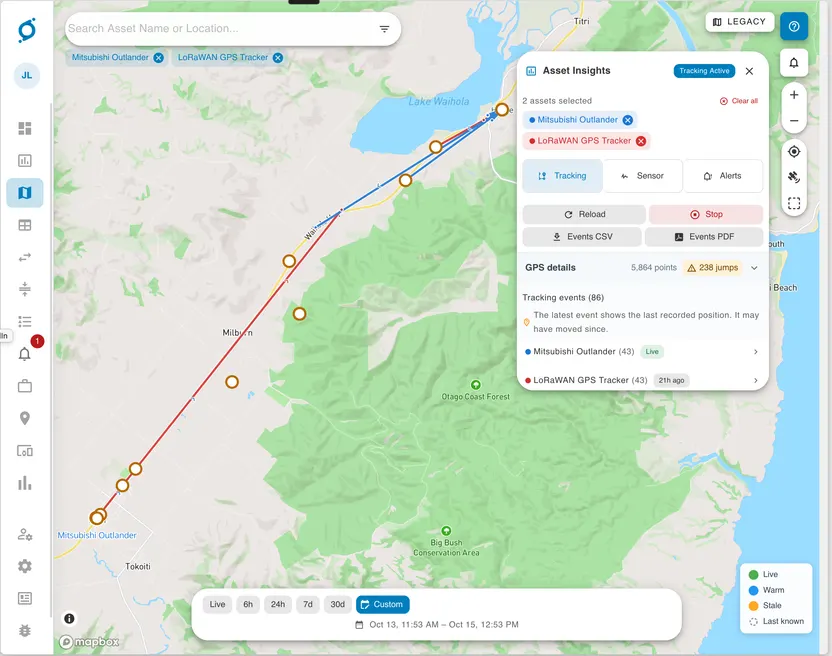
OnSight showing the vehicle tracker in blue and the LoRaWAN GPS tracker in red on the same map.
Next, we'll work through antenna placement, coverage gaps, movement-triggered reporting and battery behaviour. We're also planning how we want to operate the LoRaWAN network.
It's good to have the hardware talking again. Now we have a route to revisit and a set of practical questions to test.
If you're exploring GPS tracking for your equipment, tell us where it travels and how often you need a location update. Those details give us a useful starting point.
Related Posts

When ChatGPT disagrees with your software developer