
Ledger By Calo

Ledger Logo

RFID workflow tracking for issued, returned, and maintained operational assets.

Ledger helps operational teams replace spreadsheet-heavy issue and return processes with scan-based workflows, clearer accountability, and lifecycle visibility across garments, tools, equipment, and shared assets.

A Calo x Zentag initiative

Why Teams Buy

Problem

Manual issue/return handling, missing items, weak maintenance visibility, and poor audit trail create avoidable admin and slower operations.

Mechanism

Ledger uses RFID-enabled workflow tracking across assignment, return, maintenance, and status changes so operators can work from scans instead of manual reconciliation.

Outcome

Teams spend less time chasing records, recover more missing items, and get cleaner reporting on asset accountability and lifecycle activity.

Where Ledger Fits

Choose the workflow path that matches the operational problem you need to fix.

Ledger performs best when the use case is specific. These two starting points align the message, proof, and call to action with the way buying teams actually evaluate RFID workflow software.

Primary ICP

RFID Uniform And Garment Operations

For uniform programs, regalia, linen, and rental garments where issue, return, repair, and reconciliation are still too manual.

Reduce spreadsheet chaos during issue and return periods.

Keep maintenance and status history in one operational record.

Use existing garment proof to support the buying case faster.
Book a 20-minute workflow review

Second ICP

RFID Tool And Equipment Tracking

For construction, workshops, field teams, and shared-kit environments where assignment, returns, and service history need better visibility.

Show who has what, what came back, and what needs service.

Reduce manual chasing with scan-based assignment and return tracking.

Support stronger accountability across shared operational assets.

See a live Ledger demo

How Ledger Works

One system for assignment, return, maintenance, and status history.

Ledger is designed around day-to-day handling, not just identification. RFID is the mechanism, but the value comes from how quickly teams can issue assets, confirm returns, flag maintenance, and explain what happened later.

Assignment

Issue And Allocation

Match tagged assets to a person, order, or team without relying on disconnected spreadsheets or manual lookups.

Return

Scan-Based Returns

Process returns faster, highlight exceptions earlier, and confirm what is still outstanding before teams start reconciliation.

Maintenance

Service And Status History

Track repair, cleaning, inspection, and maintenance activity alongside the asset record instead of in separate tools.

Reporting

Operational Visibility

Give managers a cleaner audit trail on usage, location, outstanding returns, and lifecycle activity.

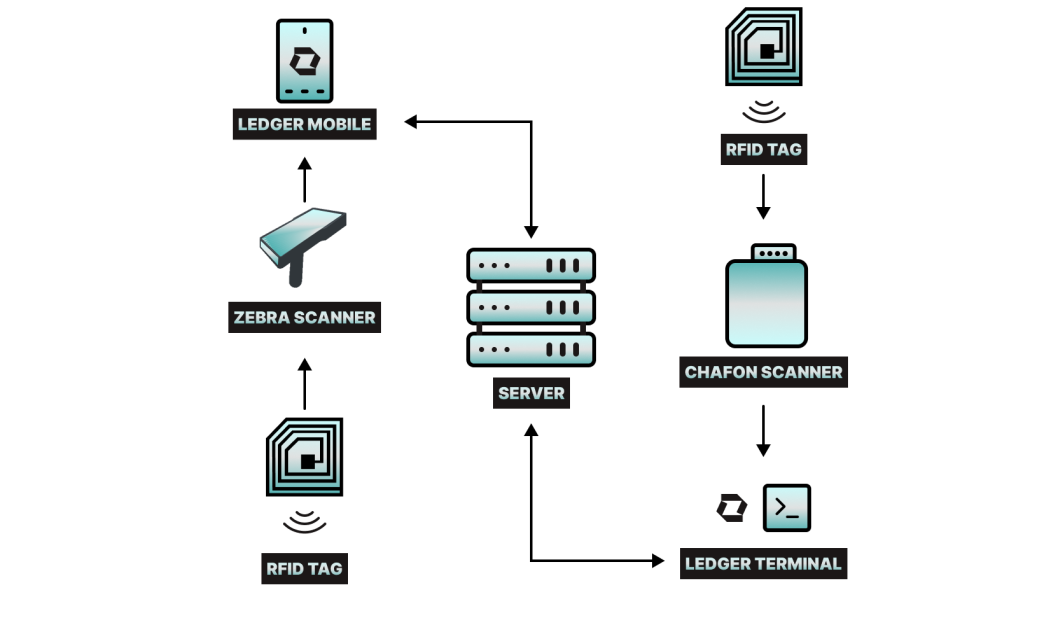
Ledger workflow diagram

Proof And Readiness

Start with operational proof, then build stronger commercial proof as leads come in.

Case Study

The GWC Regalia Hire implementation already gives Ledger a workflow-specific proof point for garment issue and return operations.

Hardware Support

Supported handheld and desktop reader pages show what fits a fixed desk workflow versus a mobile scan-heavy workflow.

Workflow Screens

Product visuals and workflow diagrams show how Ledger supports issue, return, maintenance, and reporting in one system.

Implementation Fit

Ledger can be framed as the workflow layer for RFID deployments that need accountability and reporting, not just tag reads.

Next Step

Choose the vertical page that matches your workflow, then book the right conversation.

Garments should lead with a workflow review. Tools and equipment should lead with a demo. Both pages carry the same Ledger product story, but framed around the operational job the buyer is trying to improve.